Innovation, research and sustainability to strengthen the competitiveness of the Italian wine supply chain
Hi-Tech Wine Supply Chain for Sustainability is an integrated supply chain programme designed to support wine companies in transitioning towards more sustainable, innovative and competitive production models.
The project responds to a transformation that is now clearly visible in the market: alongside quality, origin and traceability, consumers and industry professionals are placing increasing importance on the environmental and social performance of products and companies. The strategy therefore involves the entire supply chain, from grape production to winemaking and commercialisation, as well as research, quality schemes and the promotion of sustainable wines.
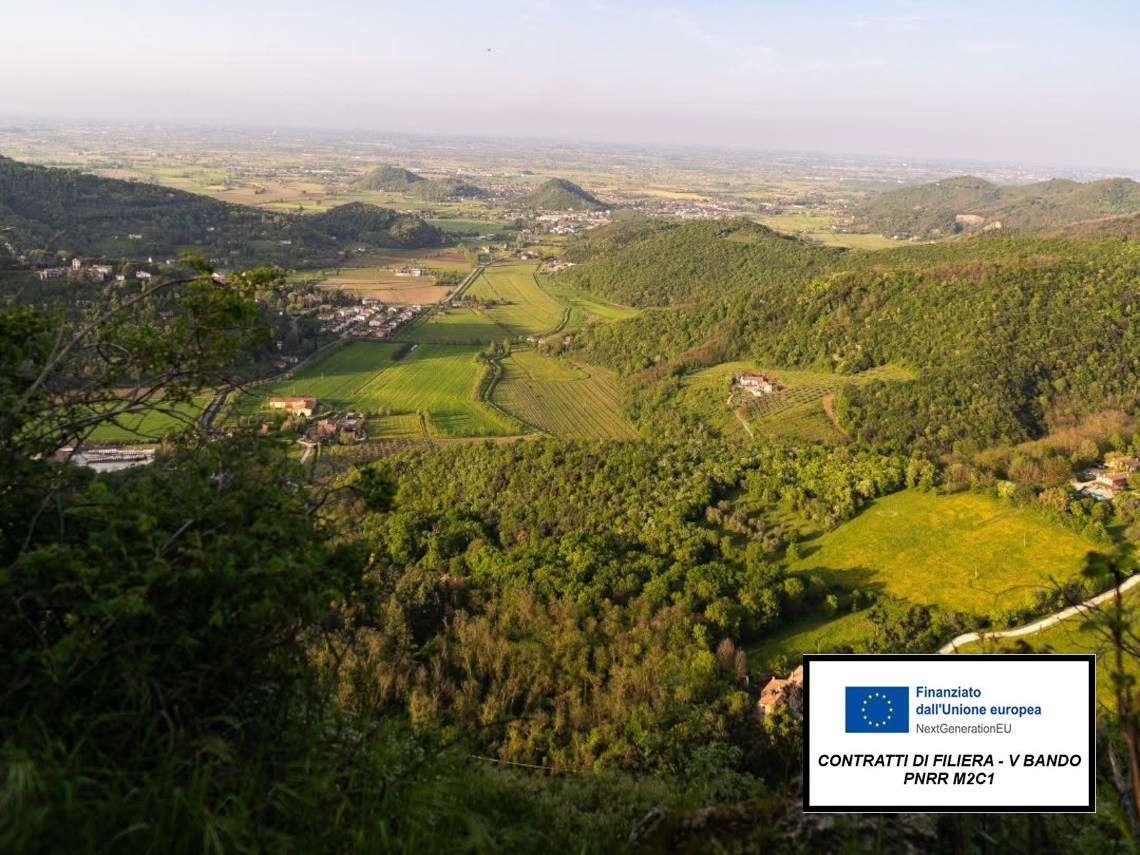
The programme covers six Italian regions: Veneto, Trentino-Alto Adige, Lombardy, Apulia, Sardinia and Emilia-Romagna, bringing together production companies operating in different territories, climatic conditions and wine-growing systems.
The role of Consorzio EDEN
Consorzio EDEN is the project promoter and lead partner of the programme. It represents the beneficiaries in their relations with the institutions involved and coordinates the implementation of the Supply Chain Contract, while also contributing to the commercial enhancement of the project and the dissemination of its results.
The Sustainability Transition System
One of the central elements of the project is the implementation of a Sustainability Transition System – S.T.S., designed to support companies in the progressive improvement of their environmental, social and economic performance.
Sustainability is therefore addressed not as an abstract requirement, but as a management process involving production, corporate organisation, resource use, quality, working conditions and competitiveness.
Technology and innovation from vineyard to winery
The project’s “Hi-Tech” component focuses on the introduction of technologies, infrastructure and management systems capable of improving efficiency and reducing impacts throughout the production process.
In the vineyard, measures focus on modernising management techniques, protecting natural resources and biodiversity, reducing environmental impacts, and improving both working conditions and the economic sustainability of companies.
In winemaking, bottling and commercialisation activities, investments are aimed at introducing innovation and more efficient management systems, reducing waste, and promoting the reuse of materials and by-products in accordance with circular economy principles.
Research as a driver of the transition
Research is one of the project’s most distinctive components and is entrusted to Istituto Delta Ecologia Applicata.
The objective is to develop tools, organisational models and technical and management solutions capable of supporting companies in the transition towards production systems with a lower environmental impact. Activities are structured around three main areas: context analysis, improvement of production systems under sustainable management, and participation in environmental quality schemes.
The research applies the Life Cycle Assessment – LCA methodology to quantify the performance of production systems through four main indicators:
- Carbon Footprint
- Water Footprint
- Circularity Footprint
- Environmental Footprint
REGIONS INVOLVED IN THE PROJECT